Quick Summary
Planning a luxury vacation home renovation starts with defining what the home must do for your family and guests, then setting a budget that prioritizes quality over price. Settle who will use the home, which spaces matter most, and how it will be used between visits before design work begins.
- Decide who will use the home, how often, and which spaces matter most.
- Plan for guest or rental use between visits, since it affects durability and finish choices.
- Budget for design fees, specialty materials, and contingency funds.
- Confirm zoning, HOA approval rules, and which changes need building permits before design begins.
- Verify permit requirements with the local building department, since they vary by county and municipality in Florida.
Table of Contents
- Set Your Goals and Budget Before Any Design Work Begins
- Vacation Home Renovation Checklist and Permit Requirements
- Renovation Permit Application Process and Vacation Home Renovation Timeline
- Frequently Asked Questions
Set Your Goals and Budget Before Any Design Work Begins
Every luxury vacation home renovation succeeds or fails long before the first tile goes down. Define what the home must do for your family and guests, then set a budget that reflects quality over price. A clear vision keeps a second-home project focused and on track.
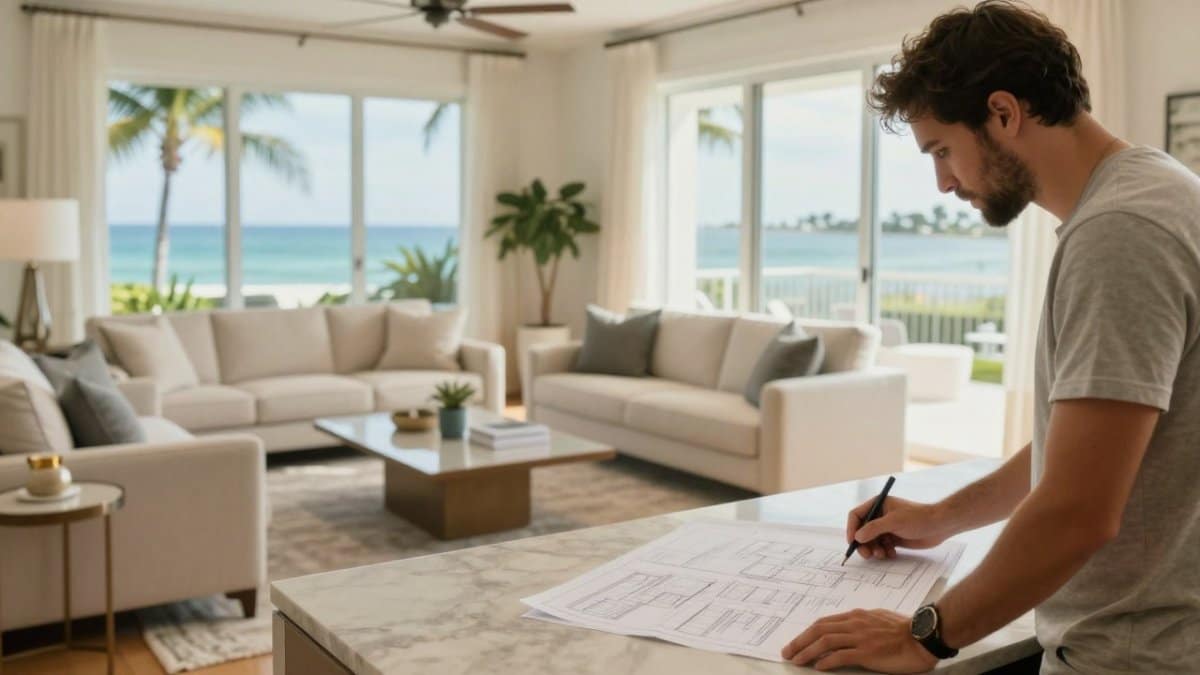
Work through these questions with your design-build team:
- Who will use the home, and how often?
- Which spaces matter most, kitchen, primary suite or outdoor living?
- How will the home be used between visits, including guest or rental plans?
- What level of finish and durability do you expect in each room?
Luxury budgets should also account for design fees, specialty materials and contingency funds. Request a consultation with Bluestone Contractors for a project-specific budget discussion.
The article lays out the core planning questions and budget considerations to settle before design begins.
| Planning focus | What to decide | Why it matters |
|---|---|---|
| Use and frequency | Who uses the home and how often | Shapes layout priorities |
| Key spaces | Kitchen, primary suite or outdoor living | Guides where budget goes first |
| Between-visit use | Guest or rental plans | Affects durability and finish choices |
| Finish level | Quality and durability per room | Sets material standards |
| Budget components | Design fees, specialty materials, contingency | Protects luxury budget from surprises |
Vacation Home Renovation Checklist and Permit Requirements
Use a checklist to keep the project moving through each stage. Confirm the following before design work begins:
- Confirm zoning and any community or HOA approval rules.
- Identify which changes need building permits.
- Schedule surveys, engineering reviews and site measurements.
- Plan layouts for kitchens, sleeping quarters and entertaining areas.
- Select durable materials suited to frequent guest use.
- Plan lighting, natural light and reliable home technology, including Wi-Fi.
Permit requirements vary by county and municipality in Florida, so verify your property’s specific requirements with the local building department before finalizing plans.
Renovation Permit Application Process and Vacation Home Renovation Timeline
Most permit applications require drawings, specifications and contractor licensing details submitted to the local building department. A design-build team can prepare and manage this paperwork so the review stays on schedule.
Plan the timeline in phases: design, permitting, construction and final inspection. Permit review times differ by jurisdiction, so ask your team to build realistic approval windows into the schedule.
Bluestone Contractors guides clients through this process from planning through completion, so you can focus on the vision for your second home.
Last Updated: November 7, 2026
Frequently Asked Questions
What permits are typically needed for a home renovation?
Most renovations that change structure, electrical, plumbing or mechanical systems require a building permit from the local building department. Cosmetic work such as paint or finish replacement often does not. Because requirements vary by county and municipality, confirm with the local building department before work begins. A design-build team that handles permits from the start prevents delays and avoids costly rework once inspections begin.
How can I plan a renovation when I do not live near the property?
Remote planning works best with a single point of contact, a detailed scope document and scheduled progress reviews with photos and written updates. Establish a clear approval process for design selections and budget changes before construction starts. Choose a team that manages the architect, designer and builder together so you are not coordinating between them yourself.